2010 The GeigerCars Cadillac CTS-V Brute Force Powered By A Supercharged 6.2 liters V8 Engine

2010 The GeigerCars Cadillac CTS-V Brute Force

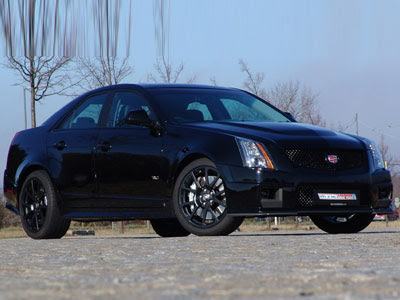
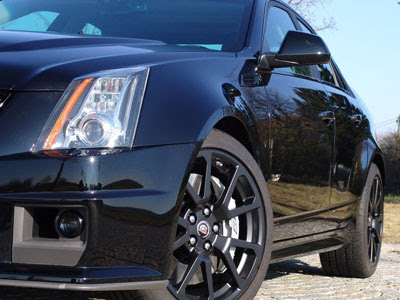
GeigerCars.de, a German tuner specialized in North American cars, has launched an upgrade program for the Cadillac CTS-V. Despite its German location, Geiger Cars shows a great passion for tuning American cars. Instead of getting even more power and torque out of neighbouring brands like the Audi RS 6, the BMW M5, or the Mercedes-Benz E 63, Geiger chose to cross the Atlantic and create a monster out of a beast.
2010 The GeigerCars Cadillac CTS-V Brute Force

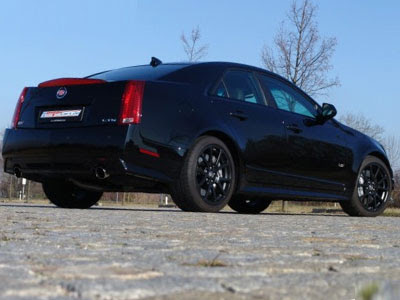
The performance saloon segment has for years been the exclusive domain of German manufacturers, for vehicles like the Audi RS6, the BMW M5 or the new Mercedes E63 AMG set the bar so high that most others don't even try to compete. So it's all the more surprising that the American Cadillac of all brands has suddenly hit back with the CTS-V, a lighting ride which has left a good many journalists pale-faced and shaken after test drives. 564 series HP and a massive maximum torque of 747 Nm are a clear challenge to Munich, Ingolstadt and Stuttgart.
2010 The GeigerCars Cadillac CTS-V Brute Force

What is more, Cadillac is now marketing the CTS-V in Europe for 74,400.00 euros - which needless to say leaves its German competitors trailing on the price-performance front.
Tradition, as everyone knows, is an obligation to deliver. That is why GeigerCars.de is offering special performance tuning for the Cadillac CTS-V, timed to coincide with the American performance saloon's European launch.
2010 The GeigerCars Cadillac CTS-V Brute Force

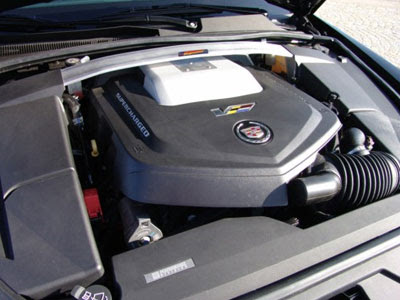
The four-door Cadillac with the tapered bonnet, The Cadillac CTS-V already comes packed to the hilt with a supercharged 6.2-litre LSA V8 based on the LS9 V8 from the Corvette ZR1. In its raw form it makes 415kW (564hp) at 5900rpm and 747Nm of torque. Not content, Geiger engineers upped the charge pressure releasing 455kW (619hp) and 850Nm of torque - a level few sports cars can match, and called it Brute Force. Drive is still thrusted upon the 6-speed gearbox and the rear wheels, although fifth and sixth gears are shortened. Top speed is rated at over 330km/h (205mph).
2010 The GeigerCars Cadillac CTS-V Brute Force

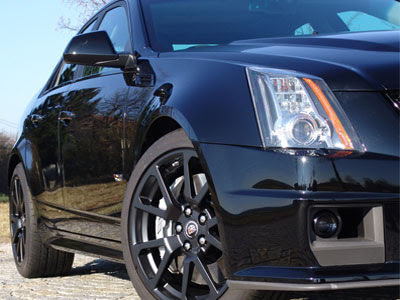
One thing is for sure: the Geiger Cadillac CTS-V shoots into action in all situations and keeps a joyful grin on its driver's face in every one of its manual gears. Not only that, but its optimised chassis means the CTS-V offers the perfect balance between long-distance comfort and an uncompromising hunger for curves and speed. In the face of such American sports perfection, we can only say "hats off"!". Geiger gives assurances that the car is a good compromise between a long-distance cruiser and a sharp, agile cornering machine. It can be had for €84,900, just €10,500 more than what Cadillac charges for the standard vehicle in Europe
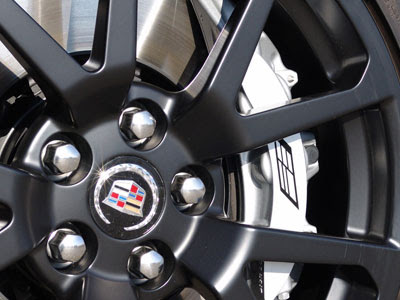
2010 The GeigerCars Cadillac CTS-V Brute Force

Technical data, Geiger Cadillac CTS-V :
Engine: 6.2 liters V8 with compressor, increased charge pressure
Power: 619 HP at 5900 rpm
Max. torque: 850 Nm at 4000 rpm Bore x stroke: 103.2 x 92.0mm
Drive: rear-wheel drive
Gears: 6-gear transmission; 5th and 6th gear shortened
Brakes: ventilated disc brakes at front and rear
Top speed: 330km/h
Price: 84,900.00 euros

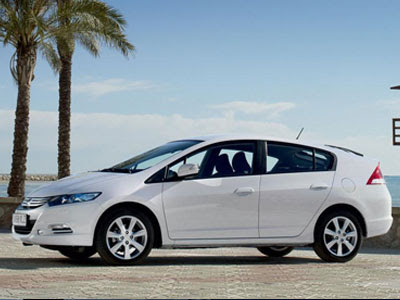
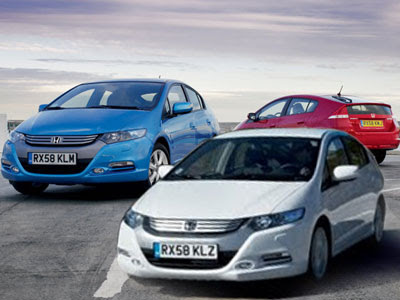
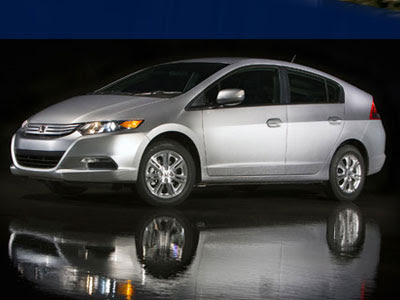
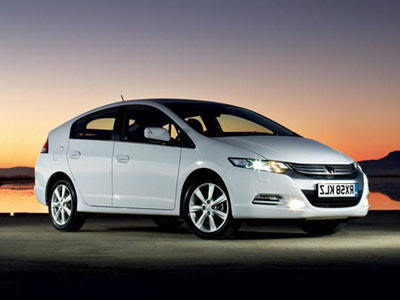
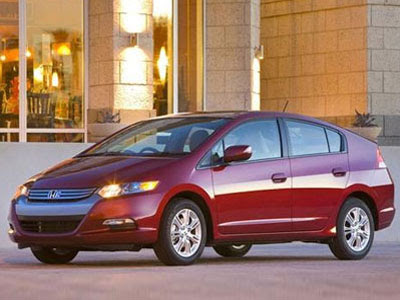
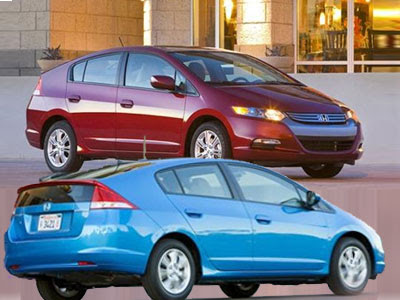
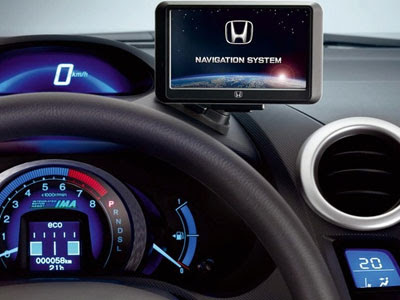
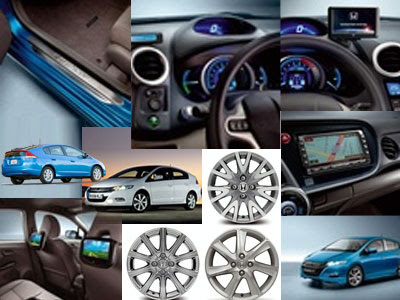
2010 Honda Insight EU Version Called 'Aero Athlete' Concept

2010 Honda Insight EU Version

Although the Honda Insight design team started with a blank piece of paper - in that this was a brand new model with no history - they faced many challenges in creating the exterior appearance of the Honda Insight.
On the one hand, as a low emission hybrid car, it had to express environmental credentials - it had to look like a 'green' car - but on the other hand it had to appear dynamic and fun to drive; part of Honda's key design principles. Above all, in line with the positioning of Honda Insight, the design had to appeal to a broad range of people.
2010 Honda Insight EU Version

While the 'greenness' of the car may have challenged the sporty direction of the overall design, in some areas it actually helped the dynamic cause. Because the newly-developed IMA system is more compact, it meant the nose of the car could be shorter, creating a snubbed, more aggressive look to the front end.
Another important factor that led (and to some extent restricted) the exterior design was the bodystyle itself. To appeal to as many people as possible, a 5-door layout was chosen, and this brought its own challenges, particularly when optimising the aerodynamics of the car, and creating enough headroom for passengers in the rear.
2010 Honda Insight EU Version

The Insight adopts slim, projector-style headlights in a 4-light cluster. The headlight's low beam has blue detailing, and the indicators are located in the lower bumper face.
Firstly, the line from the centre of the roof to the top of the boot lid is at the optimum angle for controlling the flow of air off the top of the car, with minimum turbulence. Also, you'll notice that the top half of the body tapers in towards the rear of the car, which also helps the air flow travel smoothly over the car. Stable air flow over this section helps the car pass through the air with minimal drag.
2010 Honda Insight EU Version

"The concept for the main shape of the car is called 'Aero Athlete'," says Mr Minowa. "It reflects a sporty, lean body with no fat, the tension of muscles and nothing unnecessary added." The Honda Insight is fitted with a seven-spoke alloy design, to enhance the sporty image of the car.
All Honda Insight grades are equipped with Honda's Vehicle Stability Assist (VSA) system, designed to assist the driver in maintaining control during cornering, acceleration and sudden manoeuvres by applying braking to the right or left hand wheels as necessary and managing the engine torque systems.
2010 Honda Insight EU Version

Honda's IMA hybrid system concept is now 10 years old - having made its debut in the original Insight back in 1999. IMA stands for Integrated Motor Assist, which consists of a low-friction 1.3 litre engine that serves as the primary power source, an ultra thin electric motor, a lightweight and compact battery with a continuously variable transmission.
This system has been used successfully in not only the Honda Insight, but also the Civic IMA, and its successor, the Civic Hybrid. Over the years the system has evolved and become smaller, more lightweight and less expensive to produce, and the latest version in the new Honda Insight is the most advanced IMA technology introduced by Honda to date. The fifth generation IMA system in the Insight is 24% more compact than the fourth generation system freeing up space for luggage.
2010 Honda Insight EU Version

The engine itself is new, but is based heavily on the 1.3-litre from the Civic Hybrid. This modified i-VTEC unit from the Civic Hybrid has been further enhanced with lessons learned from the Jazz incorporated to improve fuel economy. The low friction, pattern coated piston design has been combined with a new catalyst design to further optimise this already highly efficient power unit. These measures along with a further stabilised combustion process give a fuel economy improvement for the engine alone of 2% on what is already a highly-efficient unit.
2010 Honda Insight EU Version

When combined, the motor and engine produce lively performance ideal for urban environments, with good throttle response and acceleration times to rival conventional 1.6-litre petrol cars with automatic gearboxes. The Honda Insight reaches 100 km/h from a standing start in 12.6 seconds, and goes on to a top speed of 186 km/h.
2010 Honda Insight EU Version

Using a CVT transmission in a hybrid provides smooth and predictable gear transitions and helps keep the IMA system operating in its most efficient range. In the Insight, an evolution of the high-torque CVT unit from the Honda Civic Hybrid is used.
This version of CVT has a lower final drive gear ratio (4.200 from 3.937), which results in faster-acting initial acceleration performance.

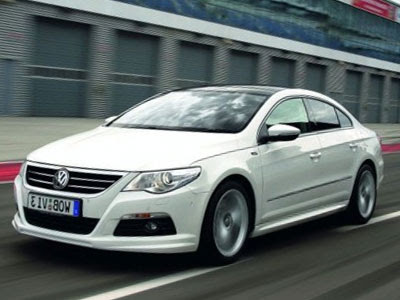
2010 Volkswagen Passat CC R-Line, The Four-Door Coupé With Exclusive Sporty Features

2010 Volkswagen Passat CC R-Line

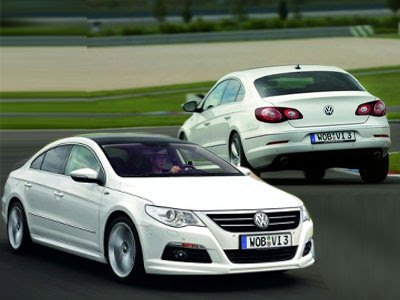
R-Line equipment is already offered on seven Volkswagen models ( Wolfsburg, 16 December 2009 ). Now the Volkswagen Passat CC R-Line has got a sportier touch. Orders are now being taken for the four-door coupé with R-Line package.
2010 Volkswagen Passat CC R-Line

The Volkswagen Passat CC R-Line comes with a 17-inch (optional 18-inch) R-Line "Mallory" alloy wheels with 235/45 tyres lend a sporty touch to the Volkswagen Passat CC R-Line. The front spoiler and side skirts, each painted in body colour, were also re-styled. In addition, R-Line logos embellish the front side sections; the rear lights are smoked.
2010 Volkswagen Passat CC R-Line

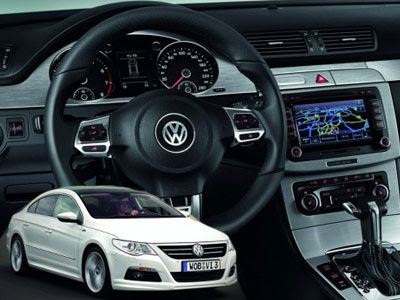
Inside the Volkswagen Passat CC R-Line, standard features include details like four customised tread plates in aluminium (with R-Line Logo in front) and a three-spoke leather-trimmed steering wheel with multifunction keys. The R-Line package has front fog lights and the Park Pilot system. The Passat R-Line leaves few wishes unfulfilled; even the base version of the Volkswagen Passat CC includes comfort and convenience features like sport seats and a climate control system.
2010 Volkswagen Passat CC R-Line

The R-Line package is available with all Volkswagen Passat CC engines. Prices start at 2,200 Euros for the Passat CC 2.0 TDI (140 PS / 103 kW) with a 6-speed gearbox.
2010 Volkswagen Passat CC R-Line

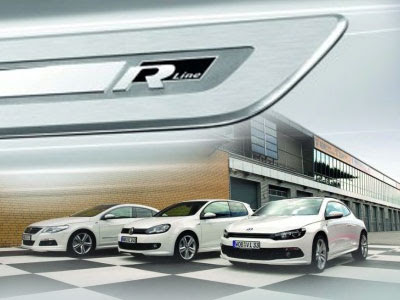
Counting versions already introduced on the Golf, Scirocco, Touran, Tiguan, Passat, Passat Variant and Touareg, a total of eight models with R-Line equipment are now on the market.

2010 Ac Schnitzer ACS3 3.5d Sports Coupe Never Tires Of Receiving Awards

2010 Ac Schnitzer ACS3 3.5d Sports Coupe

Ac Schnitzer ACS3 3.5d Sports Coupe, AC Schnitzer never tires of receiving awards. Very recently, the carmaker got a third world record for Aachen after having gone to Nardo in southern Italy. Third World Record in Succession: AC Schnitzer builds fastest diesel car! AC Schnitzer ACS3 3.5d Coupé reaches 288.7 km/h in Nardo. It's a hat-trick: for the third time, AC Schnitzer has gone to Nardo in southern Italy and brought home a third world record for Aachen.
2010 Ac Schnitzer ACS3 3.5d Sports Coupe

Historically, many records are set in the high-speed circuit. Each year in southern Italy, in collaboration with the AUTO BILD sportscars’ editors and under the aegis of Continental AG, the top vehicle tuners compete. This year, it was on Oct. 18-19, 2009. The record for the fastest road-legal diesel car was broken by the AC Schnitzer ACS3 3.5d Coupe with a speed of more than 8.7 km/h.288.7 km/h.
2010 Ac Schnitzer ACS3 3.5d Sports Coupe

This was the figure on the display of the GPS speedometer system on the 13 km long high-speed circuit after the lap of the AC Schnitzer ACS3 3.5d Coupé. The record that was broken had been that of 2006 with the TENSION as the fastest road-legal BMW. The record had held in 2007 when the GP3.10 GAS POWERED entered to represent gas-powered vehicles. AC Schnitzer cited its power upgrade as the reason for its success.
2010 Ac Schnitzer ACS3 3.5d Sports Coupe

Naturally the power upgrade which took the latest world record holder to success is part of the extensive AC Schnitzer special accessory range and available for all vehicles based on the 3.5d engine. It is TÜV-approved and available from BMW dealers.

2010 Ac Schnitzer ACS3 3.5d Sports Coupe

Another impressive performance in Nardò came from the AC Schnitzer ACS4 3.5 turbo (based on the BMW Z4 sdrive 35i). At 303.1 km/h, this was not a new world, but such a high speed is almost unheard of for a Roadster. The Z4 was also running with the commercial version of the AC Schnitzer performance upgrade for 3.5i engines.